Spring Tree Care Checklist for Homeowners in Western PA

Key Takeaway
Spring is the best time to assess winter damage on trees before hidden structural problems turn into costly emergencies.
The emerald ash borer has devastated ash trees across western Pennsylvania, making professional evaluation essential for any ash on your property.
Routine tree trimming and inspection each spring protects your home, your family, and the long-term health of your landscape.
Stump grinding, dead tree removal, and proactive pruning are best handled by a licensed professional rather than attempted as DIY projects.
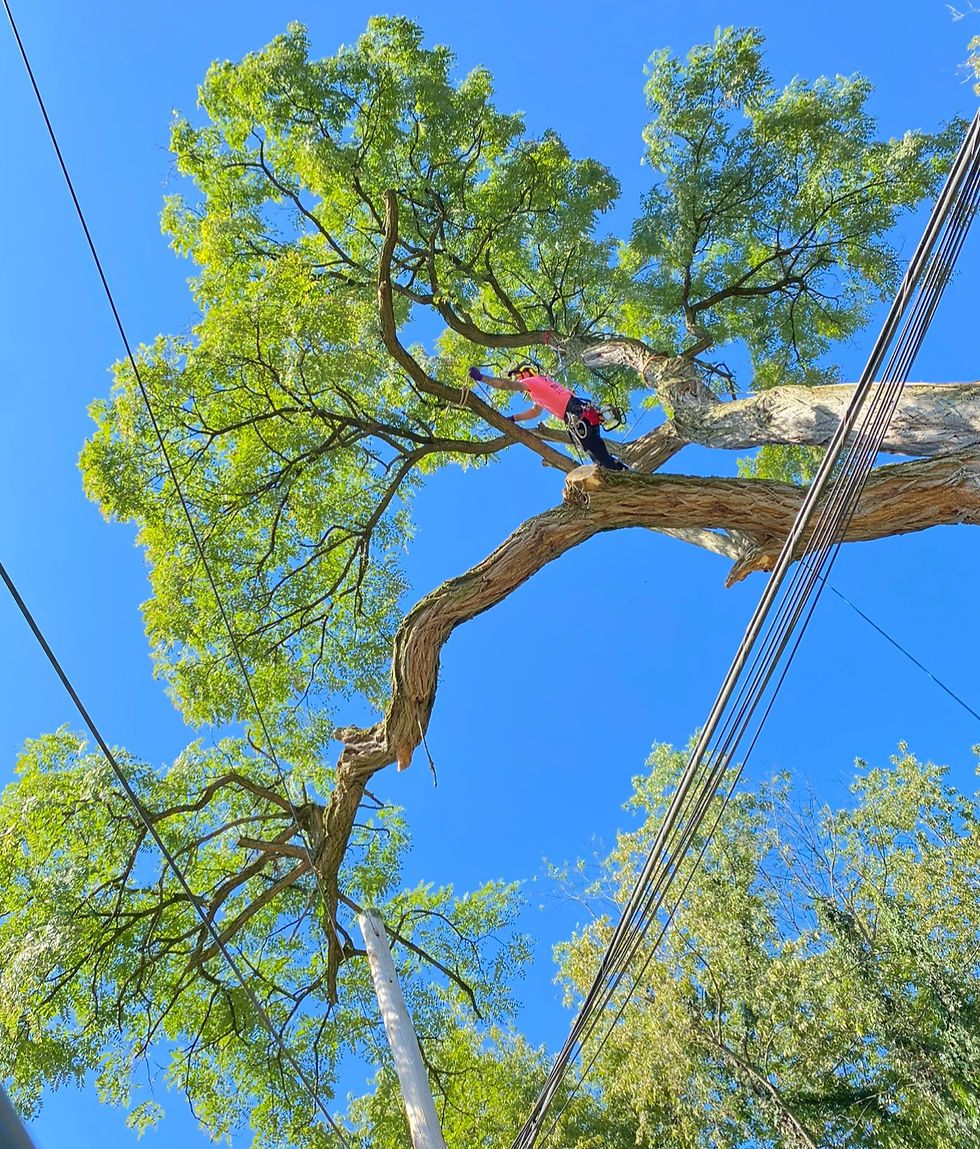
That large oak in your backyard looked fine all winter, and now that spring has arrived you are noticing cracks in the bark, hanging limbs, and a lean you do not remember from last year. Winter in western Pennsylvania is hard on trees. Ice storms, heavy snow loads, and freeze-thaw cycles stress root systems and weaken branch structure in ways that are not always obvious from the ground.
Left unaddressed, those hidden problems become falling limbs, uprooted trees, or damage to your roof, fence, or vehicle. Homeowners across Westmoreland and Allegheny Counties face these risks every spring, and the window to act before summer storms arrive is shorter than most people realize. If any of that sounds familiar, the checklist below is designed to help you move from concern to action, starting with what you can observe on your own and ending with what a qualified professional needs to handle for you.
Why This Matters for Manor, PA Residents
Spring tree care in western PA is not a luxury item on a seasonal to-do list. It is a direct line to protecting your property. Manor and the surrounding communities in Westmoreland County sit in a corridor of mature hardwood canopy that makes the area genuinely beautiful but also means more trees per property, more exposure to storm damage, and more maintenance responsibility for homeowners than you would face in a newer development with younger plantings.
The cold winters and wet springs common to this part of Pennsylvania create ideal conditions for fungal disease, wood rot, and root stress. A tree that looks full and healthy in leaf can be hiding a hollowed core or cracked scaffold branch. Professional eyes catch what the average homeowner cannot, and catching a problem in April is almost always cheaper and safer than responding to an emergency in July. That gap in cost and risk is especially significant for Manor residents whose homes sit close to large mature trees that took decades to grow to their current size.
Your Spring Tree Care Checklist for Western PA
Before you call in a professional, a quick visual walk of your property gives you useful information to share. Here is what to look for as you move from tree to tree:
Check for hanging or broken branches that are suspended in the canopy and have not fallen yet.
Look at the base of each tree for heaving soil, exposed roots, or mushroom growth, which can signal root decay.
Scan the trunk for vertical cracks, deep splits, or sections where bark has peeled away in large pieces.
Note any leaning that is new or has become more pronounced since last fall.
Identify trees with dead wood at the top of the canopy, which is often the first sign of a systemic problem.
Look for branches that cross or rub against each other, which creates wounds that invite disease over time.
Note whether any limbs are growing directly over your roof, driveway, or power service line.
Take photos and write down which trees concern you most. That information helps a professional arborist prioritize the assessment and give you accurate recommendations the same day they visit. Once you have completed your walk, the sections below explain what to do with what you found.
The Emerald Ash Borer Threat in Western Pennsylvania
This is not a warning you can afford to skip. The emerald ash borer swept Pennsylvania starting in the western counties and has now reached nearly every corner of the state. If you have ash trees on your property in Irwin, Greensburg, or anywhere in between, they need to be evaluated this spring.
The reason this pest is so dangerous is the way it kills. Ash trees die from the top down, and the upper trunk turns brittle well before the tree visibly collapses. That makes a dead or dying ash one of the most hazardous trees to remove because the brittle wood can fall unpredictably during cutting. This is not a job for a weekend with a chainsaw. It requires a professional crew with the training, rigging equipment, and safety protocols to bring that wood down in controlled sections.
Identifying a Dying Ash Tree
Look for canopy dieback at the crown, S-shaped galleries under the bark, and D-shaped exit holes roughly the size of a pencil tip in the bark surface. Bark may begin to split and fall away as the tree declines. If you suspect an ash tree on your property is infected, schedule a professional inspection before the tree progresses further into decline.
When Removal Becomes Urgent
Once an ash tree is fully dead, the clock is ticking. Dead wood becomes increasingly unpredictable, especially as summer storms roll through. Homeowners in Harrison City and Export who have delayed removal of dead ash trees have seen the consequences when a storm brings that wood down without warning. Scheduling Tree Removal in the spring, before peak storm season, is always the right call. For more on what makes dead tree removal particularly complex, Why Are Dead Trees Riskier to Remove in Summer? covers the key factors in detail.
Pruning and Trimming Before the Storm Season
Once your visual assessment is complete, addressing structural issues through professional pruning is the next step. Removing dead, crossing, or overextended branches before summer reduces the surface area that high winds can catch and dramatically lowers the likelihood of storm damage. Tree Trimming done in early spring also gives trees time to compartmentalize pruning cuts before peak growing season, which supports long-term health rather than just short-term safety.
Trees near your home or over high-traffic areas deserve the most attention. A branch that fails in a storm can cause significant structural damage to a roof or injure someone in the yard. A professional arborist will identify which branches are most at risk and prioritize cuts that deliver the greatest safety return.
Stump Grinding and Cleanup After Winter
If you had trees removed last fall or earlier this winter, spring is the right time to handle the stumps before they become a landscaping headache. Stumps left in place can attract wood-boring insects, create mowing obstacles, and continue sending up sprouts that pull nutrients from surrounding plantings.
Stump Grinding reduces the stump below grade so you can replant, lay sod, or simply reclaim usable yard space. It is a faster process than most homeowners expect, and clearing those stumps in spring sets you up for a cleaner, more manageable landscape through the full growing season.
Knowing When to Call a Professional
The question homeowners ask most often is whether a particular tree job is something they can handle themselves. The honest answer depends on the size of the tree, its proximity to your home and power lines, and the condition of the wood. For a small, healthy shrub in an open yard, minor pruning is often manageable. For anything involving a ladder, a dead or structurally compromised tree, or work near a structure, professional service is not just more convenient, it is the safer and more reliable choice.
If a storm causes sudden damage before you have a chance to schedule routine work, Emergency Tree Service is available for situations that cannot wait. Understanding what a qualified company looks like before you need one in a hurry is also worth the time. Safe Tree Removal: Why You Should Hire Professional Arborists outlines the credentials and practices that separate a reliable crew from a discount operation.
Cost and Timing Considerations for Spring Tree Work
Spring is one of the busier seasons for tree service companies in the Pittsburgh area, and scheduling books up faster than most people expect. Getting your assessment done in March or April means your work is completed before the summer storm season intensifies.
Costs for tree work vary significantly based on the size of the tree, its location on your property, the complexity of the removal or pruning, and what equipment is required. Here is what affects the final number:
Tree height and trunk diameter
Proximity to your home, power lines, or outbuildings
Whether the wood is healthy or compromised
Whether stump grinding is included or scheduled separately
Site access for equipment
Because pricing depends heavily on the specifics of your situation, the most accurate way to understand what your project will cost is to request an on-site quote. Tree Trimming Cost: What Factors Affect Your Final Price? and How Much Does Tree Removal Cost? A Complete Pricing Guide offer detailed breakdowns if you want to go in informed before your estimate.
People Also Ask
When is the best time to trim trees in Pennsylvania?
Late winter through early spring is generally the preferred window for most tree trimming in Pennsylvania, while trees are still dormant or just beginning to bud. Pruning before full leaf-out reduces stress on the tree and limits exposure to insects and disease that become more active as temperatures rise. A professional can assess whether any trees on your property need off-season attention.
How do I know if a tree needs to be removed or just trimmed?
A tree that has lost more than half its canopy, shows significant trunk decay, leans toward a structure, or has a compromised root system often warrants removal rather than trimming. Trimming works well for trees that are structurally sound but have dead, crossing, or overgrown branches. An arborist can assess the situation on-site and give you a clear recommendation based on the specific tree.
Is it dangerous to remove a dead tree yourself?
Removing a dead tree yourself carries serious risks, particularly because dead wood is brittle and can break unpredictably during cutting. Without proper rigging and experience, a section of trunk or a large branch can fall in an unintended direction. Professional crews use controlled cutting techniques and safety equipment specifically designed for this kind of work.
How often should trees be inspected by a professional?
Most arborists recommend a professional tree inspection at least once a year, with spring being the most practical time because it follows the stress of winter and precedes the storm season. Trees near structures, power lines, or areas with high foot traffic may benefit from more frequent attention. After any major storm, a follow-up inspection is always a wise precaution.
FAQ
Does Brinko Tree Service serve areas outside of Manor, PA?
Yes. Brinko Tree Service works across Westmoreland and Allegheny Counties, including Irwin, Greensburg, Harrison City, Export, Murrysville, and many surrounding communities. If you are not sure whether your address is within the service area, reaching out directly is the fastest way to get a confirmation and schedule an estimate.
How should I prepare my property before a tree crew arrives?
Clear any vehicles, outdoor furniture, or movable items from the work zone before the crew arrives. Make sure the crew has unobstructed access to the tree and any equipment staging areas. If you have pets, keeping them inside during the work protects everyone on site.
Will my yard be cleaned up after the work is done?
A reputable tree service includes debris cleanup as part of the job. This typically means wood is chipped or hauled away and the work area is raked and left in reasonable condition. Ask about cleanup specifics when you receive your estimate so expectations are clear on both sides before work begins.
What should I do if a tree falls on my property during a storm?
If a tree falls and threatens your home, power lines, or anyone's safety, stay clear of the area and contact your utility provider if lines are involved. Then call a tree service that offers emergency response. Avoid attempting to move large sections of the tree yourself, especially if the wood is under tension from the fall position.
Ready for Spring? Brinko Tree Service Has You Covered
With nearly 20 years of experience serving homeowners across Westmoreland and Allegheny Counties, the Brinko Tree Service team has seen every kind of spring situation western Pennsylvania produces. Our crew includes ISA-credentialed arborists who are trained to identify structural risk, pest damage, and disease at the earliest possible stage, before a manageable problem becomes an expensive emergency. We are fully licensed and insured, and we have built our reputation in Manor and surrounding communities by showing up prepared, communicating clearly, and leaving your property better than we found it.
Spring fills up fast. If you have trees that need attention, the best time to schedule is now, before everyone else in your neighborhood has the same idea. Visit Brinko Tree Service or call 412-373-7450 today. Our experienced, ISA-credentialed team is ready to assess your trees and get your property prepared for a safe season ahead. Contact us for more information.


Comments