What Rights Do You Have If a Neighbor's Tree Is Dead
- Brinko Tree Service
- 11 hours ago
- 8 min read
Key Takeaway
Pennsylvania property law generally holds each homeowner responsible for trees originating on their own land, but liability shifts when negligence can be proven.
If a neighbor's dead tree falls and damages your property, you may have legal recourse, but documenting the hazard in writing first strengthens your position.
Homeowners in Westmoreland and Allegheny Counties should act quickly when a dead tree is identified, especially given the region's history of damaging summer storms that regularly affect communities like Manor, Irwin, and Harrison City.
A professional tree assessment from a licensed local company provides the documentation and action plan needed to protect your home and resolve neighbor disputes.

Your neighbor's tree has been standing dead for months, leaning slightly toward your fence, and every windstorm makes you hold your breath. You have mentioned it casually, but nothing has happened, and now you are wondering what rights you actually have. This is one of the most common tree-related disputes homeowners face in southwestern Pennsylvania, and the answer is more nuanced than most people expect.
The frustration is real, and the risk is real too. Summer storms across the Manor and Irwin area regularly bring down weak and decaying limbs with very little warning, and a tree that looks stable in April can become a projectile in July. In Westmoreland County, where older tree canopy lines many residential streets, the combination of aging trees and increasingly severe storm seasons makes this a concern that affects a wide range of neighborhoods. Understanding your rights before something happens, rather than after, is the smartest move you can make.
What Pennsylvania Law Says About Dead Trees and Neighbor Responsibility
Understanding your rights regarding a neighbor's dead tree in Pennsylvania starts with a simple but important principle: each property owner is generally responsible for trees rooted on their own land. If your neighbor's dead tree falls onto your property, Pennsylvania courts typically look at whether the tree owner knew or should have known the tree was hazardous. That knowledge, or reasonable awareness of it, is what creates legal liability.
Pennsylvania courts have historically applied what is often called the "Massachusetts Rule" in tree disputes, which holds that a landowner is not automatically liable for damage caused by a naturally growing tree unless they had actual or constructive knowledge of a defect. This differs from stricter standards applied in some other states. In practice, what this means for Pennsylvania homeowners is that proving the neighbor was aware of the hazard is essential to establishing liability. That awareness is most effectively established through written notice.
If you send your neighbor a written notice, whether by letter or email, stating that their tree appears dead and poses a risk to your property, you have created a documented record. Should the tree later fall and cause damage, that notice becomes critical evidence that the neighbor was aware of the hazard and failed to act. Courts in both Westmoreland and Allegheny Counties have considered this kind of prior notice when evaluating neighbor tree disputes, and it consistently matters.
Your Options When a Neighbor Ignores the Problem
When informal conversation fails, homeowners in Pennsylvania have a few practical paths forward.
Written notice: Send a dated letter or email describing the tree's condition and requesting removal within a reasonable timeframe.
Municipal code complaint: Some municipalities in Westmoreland and Allegheny Counties have nuisance ordinances that apply to hazardous trees. Contact your local borough or township office to ask about enforcement options in your specific community.
Homeowner's insurance: If the tree falls before removal occurs, your own insurance policy may cover damage to your structures even if the tree originated on the neighbor's property.
Small claims or civil court: For significant damages, you may have grounds to pursue the neighbor if you can demonstrate they were notified and did not act.
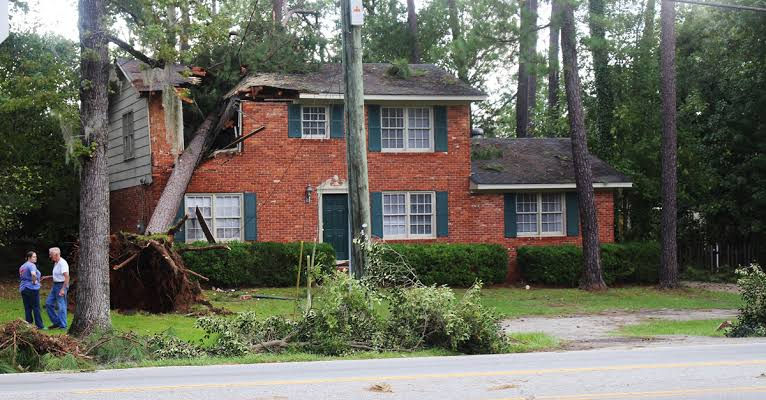
The bottom line is that you cannot legally enter your neighbor's property and remove the tree yourself, even if it poses a clear danger. Attempting to do so could expose you to a property trespass claim that undercuts your legal position entirely. If the situation has escalated to the point where a tree has already fallen or is actively threatening your home, Emergency Tree Service is available to respond quickly and safely to stabilize the situation on your side of the property line.
Timing Matters More Than Most People Realize
Dead trees do not improve with time, and waiting through another season carries real risk. In southwestern Pennsylvania, high winds from summer thunderstorms can snap a weakened trunk in seconds. The spotted lanternfly quarantine that now covers most of Pennsylvania, including the southwest, is also worth noting. This invasive pest attacks maples, black walnut, birch, and willow, weakening trees gradually in ways that are not always visible from the outside. A tree that appears merely stressed today may be structurally compromised well beyond what it looks like from the ground. Homeowners in Manor, Penn Township, and surrounding Westmoreland County communities have been navigating lanternfly pressure for several seasons now, and its effect on local tree health is real and ongoing.
If the tree in question is on your property and you have been putting off the decision, there is no better time than before storm season accelerates. For trees that are already leaning or showing advanced decay, Why Are Dead Trees Riskier to Remove in Summer? will give you a clearer sense of why professional removal timing matters.
Signs a Dead Tree Has Become an Urgent Hazard
Not every dead tree needs to come down this week, but some do. Here is what to watch for when assessing urgency.
A tree that drops large branches without a storm is a serious red flag. Bark that is falling away in sheets, fungal growth at the base of the trunk, or a visible lean that has increased over recent months all point to structural failure being imminent. If the tree is within striking distance of your home, a vehicle, a utility line, or where your family spends time outdoors, those risks need to be evaluated by a professional, not estimated from the sidewalk.
Proper Tree Trimming can address a tree that is partially dead or has significant dead wood without requiring full removal, but only when the trunk itself is still structurally sound. An on-site assessment is the only reliable way to know which situation you are in. For a better sense of what professional removal actually involves and what separates qualified companies from the rest, Tree Removal Companies: How to Choose the Right One is a useful starting point.
Why Brinko Tree Service Is the Right Choice in Manor, PA
With nearly 20 years of experience serving homeowners across Westmoreland and Allegheny Counties, Brinko Tree Service understands the local conditions, the local weather patterns, and the real concerns that come with dead or hazardous trees near a home. Our team handles everything from full Tree Removal to Stump Grinding, and we approach every job with the safety and precision that comes from doing this work professionally for two decades.
We have helped homeowners in Greensburg, Harrison City, Irwin, North Huntingdon, and communities throughout both counties navigate exactly the kind of situation you may be facing right now. Whether you need documentation of a hazardous tree for an insurance or legal purpose, or you simply need a dead tree gone safely and efficiently, our crew is ready to help you move forward with confidence.
People Also Ask
Who is responsible if a neighbor's dead tree falls on my house?
In Pennsylvania, the tree owner is generally responsible if they were aware the tree was hazardous and failed to act. Pennsylvania courts have applied a knowledge-based standard, meaning prior written notice significantly strengthens your legal position. Your own homeowner's insurance may also cover structural damage regardless of fault, so contacting your insurer promptly is always a smart first step.
Can I force my neighbor to remove a dead tree in Pennsylvania?
You cannot legally compel your neighbor to remove a tree through direct action, but you can pursue a nuisance complaint through your local municipality if applicable ordinances support it. Documented written notice and, in more serious cases, civil court action are the primary tools available to Pennsylvania homeowners. Consulting a local attorney gives you the clearest picture of your options for your specific situation.
What happens if I remove my neighbor's tree without permission?
Removing a tree from your neighbor's property without consent is considered a trespass and property damage under Pennsylvania law, even if the tree poses a hazard. You could be held financially liable for the value of the tree. Always pursue written notice and legal channels before taking any action on someone else's property.
Does homeowner's insurance cover damage from a neighbor's tree?
Most standard homeowner's insurance policies cover damage to your structures from a fallen tree, even when that tree originated on a neighbor's property. However, coverage for debris removal and specific scenarios varies by policy. Review your policy carefully and contact your insurer promptly after any tree-related damage to understand your specific coverage.
FAQ
Should I hire a tree company to document a hazardous tree before talking to my neighbor?
Yes, having a professional assessment in writing adds significant weight to any conversation or dispute. A licensed tree service can identify decay, structural weakness, and specific risk factors that a homeowner may not be able to articulate. That documentation can be shared with your neighbor, your insurance provider, or an attorney. For context on what that process looks like and what to expect from a professional company, Tree Removal Service: What to Expect from Professional Companies is a helpful reference.
How much does it typically cost to remove a dead tree in Westmoreland County?
Costs vary depending on tree size, location, proximity to structures, and whether stump removal is included. Because no two jobs are identical, the most reliable step is to request an on-site estimate. For a general sense of what factors affect pricing, How Much Does Tree Removal Cost? A Complete Pricing Guide breaks down the key variables. Brinko Tree Service provides assessments so you know exactly what to expect before any work begins.
How long does a dead tree take to become dangerous?
There is no universal timeline. A tree can remain standing for years or fail within months depending on species, the cause of death, moisture exposure, and root condition. Trees weakened by insects, like those stressed by spotted lanternfly activity in southwestern Pennsylvania, can deteriorate faster than expected. A professional inspection is the only accurate way to assess urgency.
Do I need a permit to remove a dead tree in Pennsylvania?
Permit requirements vary by municipality. Some townships in Westmoreland and Allegheny Counties require permits for tree removal, while others do not. A locally experienced tree service will know the rules for your specific area and can help you handle any required steps before work begins.
Get Expert Help from a Trusted Manor, PA Tree Service
A dead tree next door is not a problem you should wait out. Whether you are trying to protect your home, resolve a neighbor dispute, or finally deal with a hazardous tree on your own property, the team at Brinko Tree Service is here to help. With nearly 20 years of experience serving homeowners across Manor, Irwin, Harrison City, and the surrounding communities of Westmoreland and Allegheny Counties, we know what safe, professional tree care looks like and we deliver it on every job.
Brinko Tree Service has built its reputation on doing difficult work safely, cleanly, and with honest communication from start to finish. Do not wait for a storm to make the decision for you.
Visit Brinko Tree Service or call 412-373-7450 today. Our team is ready to assess your situation and give you a clear, honest plan for protecting your property. Contact us for more information.



Comments