How Can I Spot a Tree Likely to Fall This Winter?
- Brinko Tree Service

- Dec 10, 2025
- 5 min read
AI Summary
Learn the warning signs that a tree may fall during winter storms
Understand root instability, trunk cracks, canopy imbalance, and winter stress
Know when a hazardous tree requires tree removal or tree trimming
Review the PAA and FAQ sections for fast, homeowner-friendly guidance

How Can I Spot a Tree Likely to Fall This Winter?
Winter in Irwin and Pittsburgh brings strong winds, freezing temperatures, ice loads, and rapid temperature fluctuations. These conditions place significant stress on trees, especially those that already have structural weaknesses. Many homeowners are surprised when a seemingly healthy tree falls during a storm, but in most cases, warning signs were already present.
Knowing how to identify trees at risk of falling can help you prevent property damage, protect your home, and keep your family safe through the coldest months of the year. Below, you’ll learn the key indicators of winter instability, what causes these hazards, and when to call a professional for a full assessment.
The Most Important Warning Signs to Watch For
New or worsening leaning
A lean that appears suddenly, especially after wind or heavy snow, is a major red flag. Trees lean for many reasons, but new leaning usually indicates root plate failure. Look for
Raised or cracked soil on one side
Exposed roots that were not visible before
A tilt that increases day by day
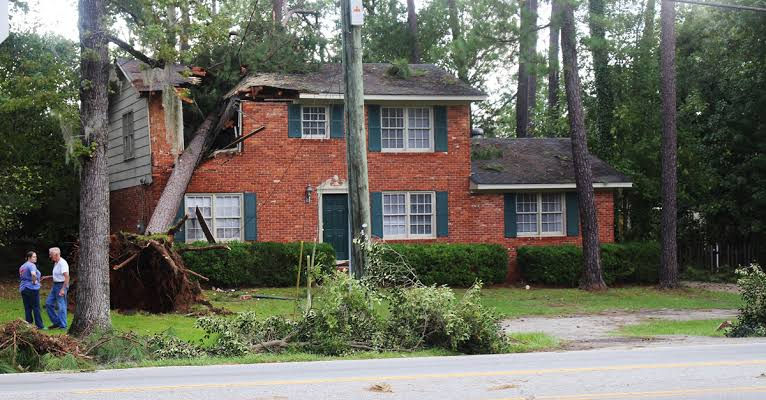
A tree leaning toward your home, driveway, or power lines is especially dangerous during winter storms.
Cracks or splits in the trunk
Winter cold makes bark and inner wood brittle. Cracks often form when the temperature drops rapidly. Vertical cracks, open cavities, or deep splits mean the tree’s structure is compromised. These cracks may widen under ice load or gusting wind, increasing the chance of trunk failure.
Dead or declining branches
Dead limbs break easily under snow and ice. If the tree has a high number of brittle, leafless branches or if bark is peeling off the tips, the crown may fail during winter storms. Trees that show deadwood in the upper canopy are especially at risk.
Fungal growth or visible decay
Fungi such as mushrooms, conks, or shelf-like growth indicate internal decay. Trees with decay may appear stable until winter stress causes hidden weaknesses to collapse. Soft wood, crumbling bark, or hollow sounds when tapping the trunk are all signs of internal rot.
Soil heaving or soft ground
Before winter freezes, Irwin often experiences periods of rain. Saturated soil loosens root anchoring. After a storm or freeze-thaw cycle, check for
Soil lifting or bulging
Waterlogged ground around the trunk
Shifting or unstable root zones
A winter storm can easily uproot trees that have poor soil anchoring.
Multiple trunks with weak unions
Trees that split into two or more large stems sometimes develop weak attachment points called included bark. Snow and ice place extra weight on these unions, increasing the chances of a major split.
Sudden loss of branches
If branches fall frequently even in calm weather, the tree may be under hidden stress. Winter winds can cause additional failures, making the tree unsafe.
Pest or animal damage
Boring insects, carpenter ants, woodpecker holes, and wildlife chewing weaken wood structurally. Winter storms then exploit these weak points, causing breakage or collapse.
Why Winter Makes Trees More Likely to Fall
Ice accumulation adds heavy weight
Even a thin layer of ice significantly increases branch weight. Evergreens catch more ice because of their needles, making them more susceptible to bending and breakage.
Freeze-thaw cycles weaken wood
Repeated thermal expansion and contraction widen small cracks. Over time, these stress points turn into major structural failures.
Frozen soil limits root strength
When soil freezes, roots have less flexibility and lose anchoring strength. If the root plate shifts under wind, the tree may fall even if it appears healthy.
Strong winter winds
Wind speeds often increase during winter storms. Unbalanced or top-heavy trees catch more wind, making leaning or tipping more likely.
What Homeowners Should Do When a Tree Looks Unsafe
Step 1: Observe from a distance
Do not walk under a leaning or cracked tree. Hazard trees can fail silently and unexpectedly.
Step 2: Look for combinations of symptoms
A single minor sign may not mean imminent danger, but several signs together usually do. For example, leaning plus cracked soil plus dead branches indicates a high-risk situation.
Step 3: Avoid DIY cutting or bracing
Improper cuts weaken the tree further. Improvised bracing is dangerous and often fails under winter wind or ice.
Step 4: Call for a professional assessment
Certified crews can determine whether tree trimming, bracing, cabling, or tree removal is necessary. Professionals also have the equipment needed to safely remove heavy or frozen limbs.
How Professionals Identify High-Risk Winter Trees
Tree experts look at
Root plate stability
Soil moisture and freeze levels
Visible cracks or wounds
Canopy structure and weight distribution
Presence of decay or pests
The tree’s lean angle and direction
Proximity to structures
If the tree poses a threat, controlled dismantling or full tree removal may be recommended. Stump grinding can follow removal for safety and cleanup.
People Also Ask
How can I tell if a leaning tree is dangerous?
If the lean appeared recently, or if soil is lifting or cracking, the tree is unstable and requires attention.
Do trees fall more in winter or summer?
Winter increases failure risk due to ice loads, high winds, and frozen soil limiting root anchoring.
Can a cracked tree survive?
Small cracks may compartmentalize, but large or deep cracks near the base often lead to structural failure.
How do I know if a tree will fail under snow load?
Trees with dead branches, decay, or weak unions are far more likely to break under snow and ice.
FAQ
Q: Are evergreens more likely to fall in winter?
A: Yes. Their dense needles collect ice and snow, adding significant weight.
Q: Should I remove snow from tree branches?
A: Light snow can be brushed off gently. Never try to remove ice by force.
Q: Can a tree be saved after winter damage?
A: Some trees recover with proper care, but leaning, splitting, or decaying trees often require removal.
Q: When is removal the safest option?
A: When the tree leans suddenly, shows deep trunk cracks, or has root plate movement.
Local Considerations for Irwin and Pittsburgh
Irwin’s clay-based soil, hillside neighborhoods, and frequent freeze-thaw weather create ideal conditions for winter tree hazards. Trees near homes, driveways, and slopes require special attention during this season. Regular inspections and early intervention help prevent emergencies.
Let Our Team Help Keep Your Property Safe This Winter
Winter hazards require attentive care and professional evaluation. Our team provides expert tree trimming, safe tree removal, and complete winter assessments to help prevent dangerous failures. If you notice leaning, cracking, or other warning signs, we can help.
Call 412-373-7450 or fill out our online form for a winter safety inspection. We are here to protect your home and keep your trees healthy all season long.



Comments