How Do Crews Remove Large Trees Safely in PA?
- Brinko Tree Service

- Feb 3
- 4 min read
AI Summary
Learn the step-by-step process crews use to remove large trees safely
Understand how planning, equipment, and experience reduce risks
See why large tree removal is more complex in Pennsylvania
Know when tree removal, tree trimming, and stump grinding are essential
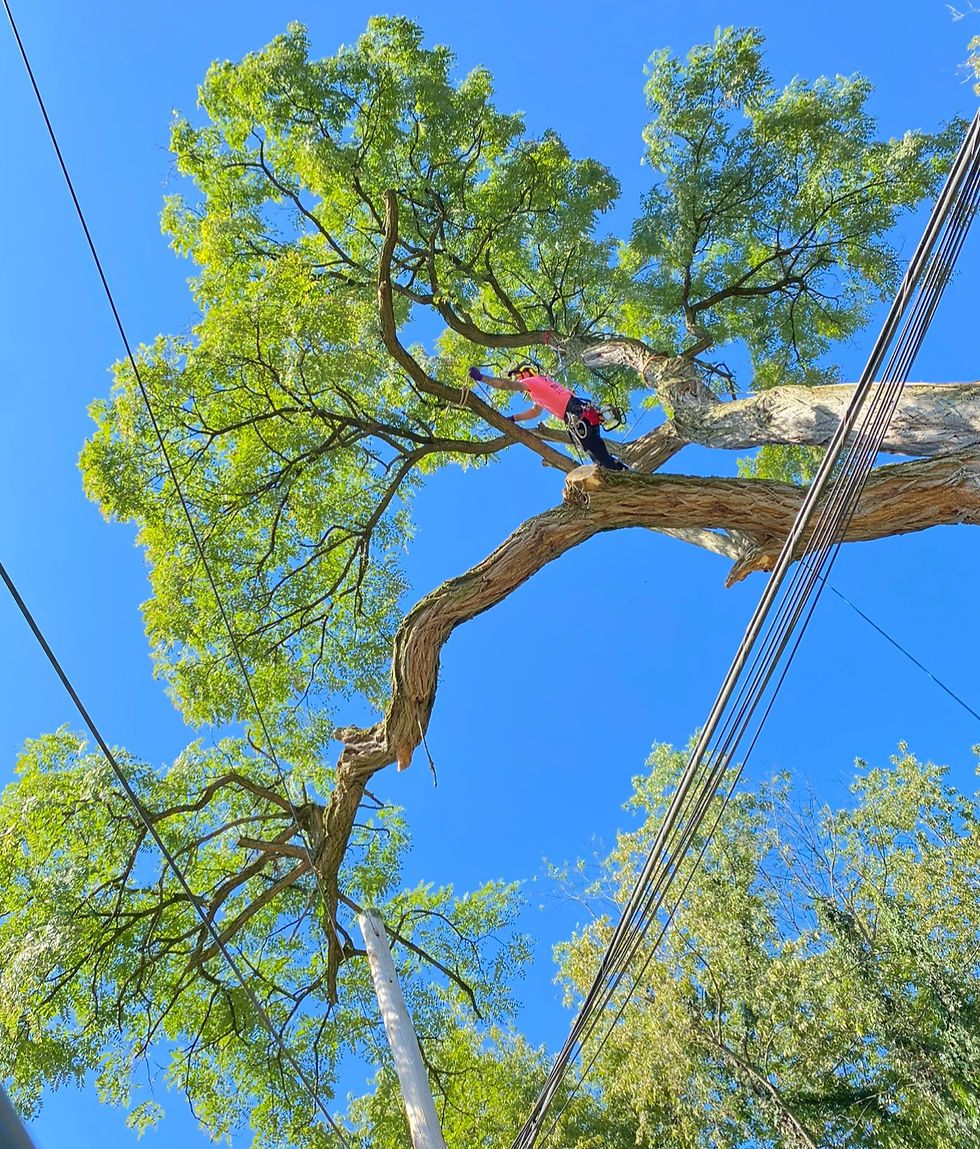
Removing large trees is one of the most dangerous types of property maintenance. In Pennsylvania, especially around Pittsburgh and Irwin, large trees often grow close to homes, power lines, roads, and neighboring properties. Combine that with hillsides, clay-heavy soil, and unpredictable weather, and the risks increase significantly.
Professional crews follow strict safety procedures to control every movement of the tree. Large trees are never removed casually. Each step is planned to protect workers, structures, and surrounding landscapes.
Step One: Site Assessment and Risk Evaluation
Before any cutting begins, crews perform a detailed site evaluation.
They assess
Tree height, diameter, and species
Structural condition and signs of decay
Lean direction and weight distribution
Proximity to homes, garages, fences, and utilities
Ground conditions and slope
Access points for equipment
This evaluation determines whether standard tree removal, advanced rigging, or crane-assisted methods are required.
Step Two: Establishing Safety Zones
Large tree removal requires clearly defined safety zones.
Crews
Identify drop zones for limbs and trunk sections
Clear non-essential people from the area
Secure equipment access paths
Protect nearby structures when needed
These zones reduce the risk of injury or accidental damage during cutting.
Step Three: Removing the Canopy in Sections
Large trees are almost never cut down in one piece.
Controlled limb removal
Crews remove branches first, working from the top down. Limbs are
Cut into manageable sections
Controlled with ropes and rigging
Lowered safely to the ground
This prevents large branches from falling unpredictably.
Rigging systems
Ropes, pulleys, and friction devices allow precise control of limb movement. Rigging reduces shock loads and protects nearby property.
In some cases, selective tree trimming is used to reduce weight and improve control before full removal begins.
Step Four: Sectional Trunk Dismantling
Once the canopy is removed, the trunk is taken down in sections.
Each section is
Carefully measured
Secured with rigging or crane support
Cut and lowered vertically
This method prevents the trunk from tipping or rolling, which is especially important near buildings or on slopes.
When Crane-Assisted Removal Is Used
For very large or hazardous trees, crews may use a crane.
Crane-assisted tree removal is used when
Trees are too large to rig safely
The tree is unstable or partially uprooted
There is no safe drop zone
The tree is close to structures or power lines
Access for ground equipment is limited
A crane lifts sections straight up and away, eliminating the need to drop heavy wood.
Step Five: Managing Ground Safety and Debris
Ground crews play a critical role during large tree removal.
They
Control rope systems
Manage falling debris
Cut and stack wood safely
Keep the work area clear
Clear communication between climbers, crane operators, and ground crews is essential to prevent accidents.
Step Six: Stump and Root Management
After the tree is removed, crews address what remains.
Stump grinding
Large stumps create safety hazards and interfere with future use. Stump grinding removes the stump below ground level, allowing the area to be leveled or landscaped.
Grinding also prevents regrowth and reduces pest attraction.
Site cleanup
Debris is hauled away, chipped, or stacked according to homeowner preference. A safe job ends with a clean, hazard-free site.
Why Large Tree Removal Is More Challenging in Pennsylvania
Pennsylvania properties often add complexity due to
Mature tree growth
Sloped terrain
Clay soil that retains moisture
Tight residential spacing
Seasonal storms and high winds
These factors require crews to adapt their methods and timing to maintain safety.
Safety Equipment Used During Large Tree Removal
Professional crews rely on specialized equipment such as
Chainsaw safety systems
Helmets, eye protection, and cut-resistant clothing
Rigging ropes and pulleys
Aerial lifts or bucket trucks
Cranes for complex removals
This equipment allows crews to work efficiently while minimizing risk.
Why Experience Matters With Large Trees
Large tree removal leaves little room for error. Experienced crews know how to
Read the tree structure and stress points
Predict how wood will move when cut
Adjust plans as conditions change
Respond quickly to unexpected issues
This experience is what keeps large tree removal safe and controlled.
Risks of Attempting Large Tree Removal Without Professionals
DIY removal of large trees often leads to
Serious injuries or fatalities
Extensive property damage
Utility outages
Incomplete removal
Higher long-term costs
Professional tree removal is always safer and more cost-effective than fixing the results of a failed DIY attempt.
People Also Ask
Can large trees be removed in one day?
Yes, many large tree removals are completed in one day with proper planning.
Are large trees more dangerous to remove than small ones?
Yes, increased weight and height significantly raise the risk.
Does the weather affect large tree removal?
Yes, high winds, rain, or ice may delay work for safety reasons.
Is crane removal always required for large trees?
No, but it is often the safest option in tight or hazardous locations.
FAQ
How do crews decide which removal method to use?
They evaluate tree size, condition, location, and access during the site assessment.
Can trimming reduce the need for full removal?
In some cases, yes, but structural or root issues often require full removal.
Is stump grinding required after large tree removal?
It is strongly recommended to eliminate hazards and allow future use of the space.
How soon can the area be used after removal?
Most areas can be used immediately after cleanup and stump grinding.
Local Considerations for PA Homeowners
Large trees in Pennsylvania are often decades old and located near homes built long after the trees were planted. This creates unique challenges that require careful planning and experienced crews. Local knowledge helps ensure safe outcomes.
Let Our Team Handle Large Tree Removal Safely
Large tree removal should never be rushed or improvised. Our team provides professional tree removal, controlled tree trimming, and thorough stump grinding to handle even the most complex jobs safely.
Call 412-373-7450 or fill out our online form to schedule a professional evaluation. We are here to remove large trees safely and protect your property every step of the way.



Comments