Why Oak Tree Removal Costs More in Western Pennsylvania
Key Takeaway
Oak trees are dense, heavy, and structurally complex, which makes their removal significantly more labor-intensive and equipment-demanding than most other species.
Factors like tree height, proximity to structures, root systems, and site access all drive up the cost of oak removal in Western Pennsylvania.
Dead or diseased oaks present unpredictable structural hazards that require slower, more deliberate work and increase the overall cost of removal.
Homeowners in Westmoreland and Allegheny Counties should always get a professional evaluation before removing any large oak rather than assuming a flat rate.

You get a quote for tree removal, and the number surprises you. The tree in question is a white oak that has stood in your backyard for decades, and what seemed like a straightforward job is anything but. Oaks are not average trees. They grow wide, dense canopies, develop massive root systems, and can weigh far more than a comparably sized maple or cherry. When a crew shows up to remove one, they are not just cutting a tree down. They are managing a complex, high-stakes operation where every decision affects your property and your safety.
That gap between what homeowners expect to pay and what they actually owe is exactly why so many people across Western Pennsylvania are caught off guard when they receive their first oak removal estimate. If you are dealing with a large or compromised oak, understanding what drives the pricing will help you plan ahead, ask better questions, and avoid surprises when the crew arrives. Our Tree Removal page outlines the full scope of what professional removal involves, including what to expect from start to finish.
Why the Region Makes This Harder
Pricing for oak removal in this part of Pennsylvania is shaped by conditions that are specific to the local landscape, including steep terrain, older neighborhoods with tight lot lines, and mature trees that have had decades to grow into power lines, fences, and foundations. Many homeowners in communities like Manor, Irwin, and Harrison City are dealing with oaks that predate their homes. These trees are deeply rooted, structurally massive, and positioned in yards that were never designed with large-scale tree work in mind.
Western Pennsylvania's hills and densely settled neighborhoods make professional tree removal more technically demanding than in flatter, more open regions. Crews often work on slopes, in confined backyards, or near structures that limit where equipment can operate. That complexity is reflected in the final cost, and it is also why hiring an experienced local company matters more here than in most other parts of the state.
What Actually Makes Oak Removal More Expensive
Oaks are among the heaviest and most structurally dense hardwoods in Pennsylvania. Removing one safely requires more time, more labor, and heavier equipment than most homeowners anticipate. Here is what that means in practice:
Oak wood is extremely dense, which means chainsaws work harder and cut slower compared to softer species.
Large oaks often have canopies that spread over structures, requiring precise sectional removal rather than a simple fell.
The root system of a mature oak can extend far beyond the visible trunk, complicating stump removal and site cleanup.
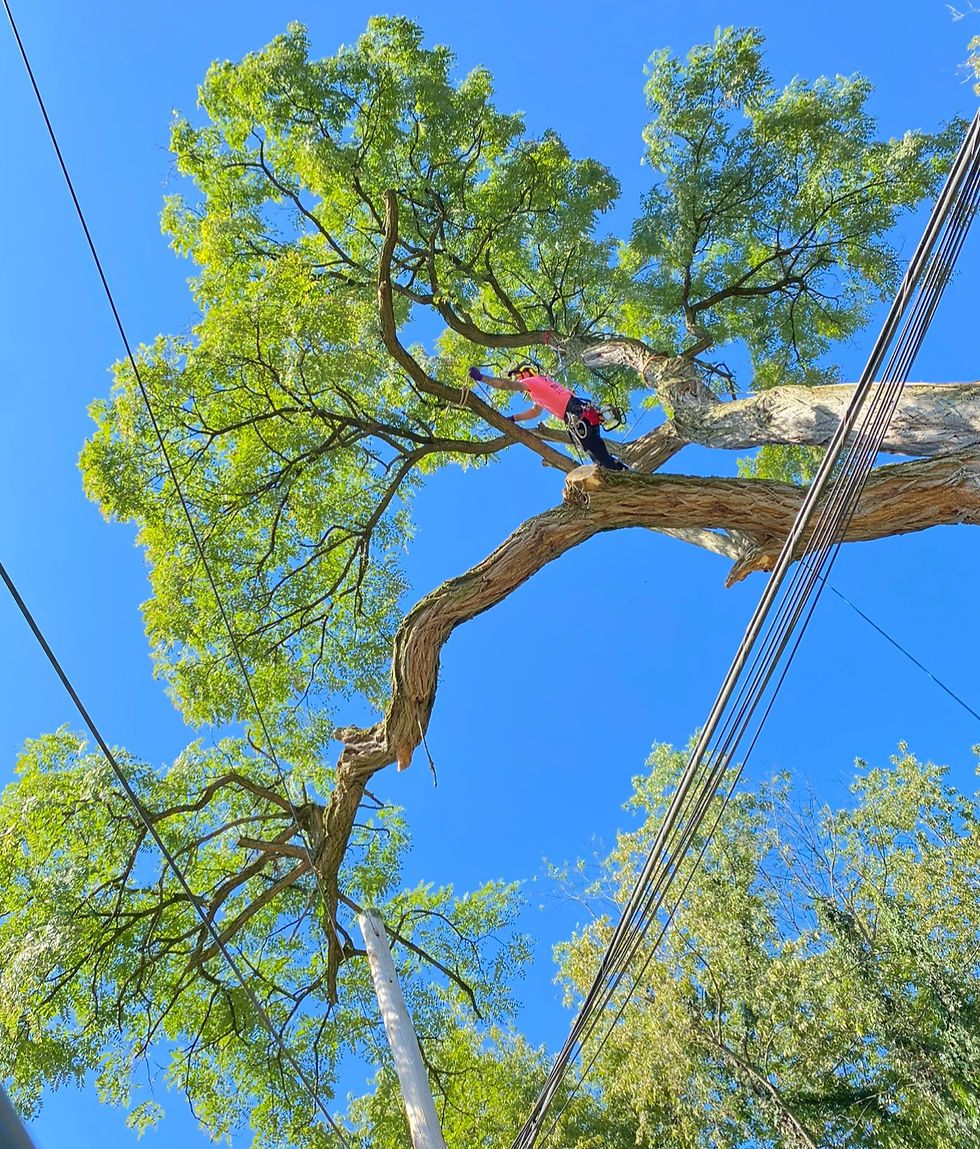
Many oaks in older communities like Greensburg and Murrysville are growing close to utility lines, requiring coordination and additional precautions.
When a tree is dead or diseased, its structural integrity is unpredictable, which means the crew must take extra steps to work safely.
Each of these factors adds time to the job, and time is the primary driver of cost in professional tree work.
The Condition of the Tree Changes Everything
A healthy oak and a dead oak are two completely different removal scenarios. When a tree is structurally compromised, the risk level increases significantly, and that affects how the crew approaches the work.
Dead Wood and Hidden Hazards
Dead oaks present serious challenges that go beyond what most homeowners expect. Unlike a living tree where wood holds tension in predictable ways, a dead hardwood can split or drop limbs without warning. Trees that die from the top down are particularly hazardous because the upper trunk becomes brittle long before the base shows visible decay, and oaks with internal rot behave the same way. Removing a structurally unsound tree requires slower, more deliberate work at every stage, which is one of the main reasons this type of job should never be treated as a DIY weekend project. You can read more about these risks in our related post on Why Are Dead Trees Riskier to Remove in Summer?
Storm Damage and Emergency Situations
When a storm compromises an oak, the situation becomes urgent. A leaning tree or one that has already partially failed poses immediate danger to your home, vehicle, and family. In these cases, homeowners across Allegheny County often need same-day response. Our Emergency Tree Service is available when a situation cannot wait, and our team responds quickly to stabilize and remove hazardous trees before more damage occurs.
Site Access and Proximity to Structures
Where the tree sits on your property matters as much as the tree itself. An oak in the middle of an open field costs less to remove than one growing twelve feet from your foundation or wedged between a fence and a detached garage.
Crews working in tight spaces must use different rigging techniques and may need to hand-carry sections of wood rather than let them fall. Properties in Export and Harrison City often have mature trees growing close to driveways, decks, and outbuildings, and every additional obstacle adds time and risk to the job. If access requires equipment to travel across landscaping or over soft ground, that is another factor that influences the final cost.
Stump Grinding and What Comes After
Removing the tree is only part of the job. Once the trunk is down, the stump remains, and most homeowners want it gone. Stump grinding is a separate service that involves specialized equipment and adds cost to the overall project.
The good news is that grinding a stump completely eliminates the visible remnant and allows you to replant or restore the area. Oaks have wide, fibrous root systems, so larger stumps may require multiple passes to fully address. You can learn more about what is involved on our Stump Grinding page before you schedule.
Practical Considerations Before You Schedule
Before you call for a quote, there are a few things worth knowing that can help you plan the project realistically.
The size of the tree, measured by height and trunk diameter, is one of the strongest predictors of cost.
Trees near power lines typically require additional coordination and may influence the timeline.
If you have multiple trees needing attention, bundling removal with Tree Trimming can sometimes improve overall value.
Timing matters. Scheduling removal in late fall or winter, when foliage is down, often makes the job cleaner and faster.
Always ask about cleanup and debris removal so you know exactly what is included in the estimate.
For a broader look at what removal typically costs and how different variables affect the final number, our guide on How Much Does Tree Removal Cost? A Complete Pricing Guide is a useful starting point. If you are still deciding whether removal is truly necessary or want to understand what professional service looks like from start to finish, Tree Removal Service: What to Expect from Professional Companies covers those questions in detail.
People Also Ask
How much does it cost to remove a large oak tree in Pennsylvania?
Oak tree removal in Pennsylvania varies significantly based on tree size, location, site access, and condition. A large or structurally compromised oak near a structure will cost considerably more than a smaller tree in an open area. The best way to get an accurate figure is to request an on-site estimate from a licensed local tree service.
Why is oak tree removal more expensive than other trees?
Oak wood is one of the densest hardwoods in Pennsylvania, which means cutting takes longer and equipment works harder. Large oaks also develop wide canopies and deep root systems that require more labor to manage safely. When the tree is near a structure or compromised by disease, the complexity and risk increase further, which is reflected in the cost.
Do I need a permit to remove a tree in Westmoreland County?
Permit requirements vary by municipality within Westmoreland and Allegheny Counties. Some townships have specific ordinances for removing large trees, especially near property lines or on lots in certain zoning districts. Checking with your local municipal office before scheduling removal is always a smart first step.
Is it worth removing a dead oak tree right away?
A dead oak tree should be removed promptly because dead hardwood becomes increasingly brittle and unpredictable over time. Branches can drop without warning, and the trunk may fail during a storm or high winds. Waiting does not reduce cost and significantly increases the risk to your property and anyone nearby.
FAQ
How do I know if my oak tree needs to be removed or just trimmed?
Signs that removal is necessary include a hollow or significantly rotting trunk, major structural failure, a severe lean toward a structure, or a tree that has died completely. If the tree is otherwise healthy but has overgrown branches or crossing limbs, trimming may be the better option. A professional evaluation is the most reliable way to determine the right course of action.
What should I look for when hiring a tree service in Westmoreland County?
Look for a company with verifiable local experience, proper insurance, and a crew that conducts an in-person assessment before providing a quote. Any company that quotes a price over the phone without seeing the tree is a red flag. Ask how they handle cleanup and debris removal, and make sure the scope of work is clearly defined in writing before the job starts.
Will the crew clean up after the oak is removed?
Reputable tree services include debris cleanup as part of the job, but it is important to confirm this before work begins. Cleanup typically covers the wood, branches, and leaves generated by the removal. Ask specifically whether the stump is included or whether grinding is a separate service that must be scheduled and priced independently.
How long does oak tree removal typically take?
A straightforward removal of a medium-sized oak in a clear area may take a few hours. A large oak near a structure, over a roof, or in a confined yard could require a full day or more depending on the approach. The crew's size, the equipment available, and the complexity of the site all affect how long the job takes from start to finish.
Brinko Tree Service: Trusted Oak Removal Across Western Pennsylvania
With nearly 20 years of experience serving homeowners in Manor, Irwin, Greensburg, and communities throughout Westmoreland and Allegheny Counties, Brinko Tree Service has handled thousands of oak removals in exactly the kinds of conditions this region presents. Our team knows how to work safely on tight residential lots, around structures, and with trees in all stages of health and decay. We bring the right equipment, the right crew, and the local knowledge that only comes from nearly two decades of doing this work right here.
If you have an oak tree that is raising concerns, do not wait until the situation becomes an emergency. A professional assessment costs nothing, and it gives you the information you need to make a confident, informed decision about your property.
Visit Brinko Tree Service or call 412-373-7450 today. We will assess your oak and walk you through every option before any work begins. Contact us for more information.



Comments