Are Pests Killing My Trees Near Pittsburgh Homes?
AI Summary
Learn the most common pests harming trees in Pittsburgh and Irwin
Understand how insects like borers, scale, mites, and caterpillars weaken and kill trees
Identify early warning signs of pest infestations that may require tree trimming or tree removal
Review helpful People Also Ask topics and FAQs for fast homeowner guidanceople Also Ask topics and FAQs for quick diagnosis and homeowner guidance

Are Pests Killing My Trees Near Pittsburgh Homes?
Trees in Pittsburgh, Irwin, and surrounding Western Pennsylvania neighborhoods face pressure from many different pests. Some pests weaken trees slowly over several years, while others kill them rapidly by attacking the trunk, roots, or inner wood. Because tree pests often work from the inside out, homeowners may not notice damage until leaves yellow, limbs die, or bark begins to fall off.
Understanding what pests are active in our region, how they affect tree health, and what warning signs to watch for can help you protect your property and prevent hazardous tree failures. Below is a detailed guide to the pests most likely to harm or kill your trees near Pittsburgh homes.
The Most Common Tree Pests in Western Pennsylvania
Emerald ash borer
This invasive beetle has already killed millions of ash trees across Pennsylvania. It tunnels beneath the bark and disrupts the tree’s ability to transport water and nutrients. Signs include
D-shaped exit holes
S-shaped galleries under the bark
Thinning upper canopy
Bark splitting
Woodpecker activity
Infested ash trees decline quickly and often require tree removal for safety.
Spotted lanternfly
These pests affect maples, walnuts, willows, fruit trees, and many ornamentals. They feed on sap and leave behind sticky honeydew that promotes mold growth. Signs include
Sticky residue
Sooty mold on leaves
Clusters of insects on bark
Egg masses on trees, furniture, or siding
While not always fatal, repeated infestations weaken the tree significantly.
Scale insects
Scale insects feed on sap and weaken branches. They can infest maples, oaks, pines, and many landscape trees. Signs include
Small bumps on bark or leaves
Sticky honeydew
Leaf yellowing
Thinning canopy
Large infestations often go unnoticed until the tree begins to decline.
Bagworms
Common on arborvitae, spruce, and juniper, bagworms consume needles and cause heavy defoliation. Look for
Small hanging bags made from needles
Brown or bare branch tips
Rapid thinning
Heavily infested evergreens may not recover.
Aphids
Aphids feed on new growth and can stress young or already weakened trees. Signs include
Sticky honeydew
Distorted new leaves
Ant activity
Sooty mold
Aphids rarely kill trees outright but contribute to long-term stress.
Mites
Spider mites thrive during hot, dry spells. They affect spruce, hemlock, and many broadleaf trees. Signs include
Stippled or speckled leaves
Fine webbing
Yellowing needles
Untreated infestations can cause branch dieback.
Borers and beetles
Many wood-boring insects attack weakened or stressed trees. Species vary, but signs often include
Sawdust-like frass
Holes in the bark
Loose bark sections
Sudden branch death
Borers often indicate internal decay or root issues.
Caterpillars and leaf feeders
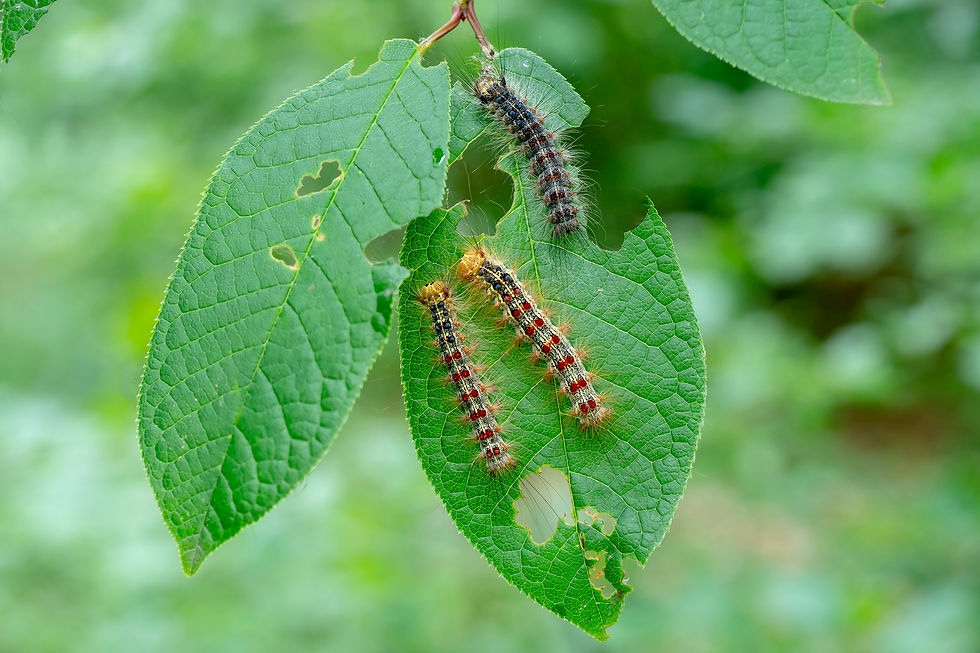
Caterpillars such as gypsy moths (spongy moths) can strip entire trees of leaves in a short period. While some trees recover, repeated defoliation weakens them and increases pest and disease risks.
Early Warning Signs Pests May Be Killing Your Trees
Look for
Yellowing or curling leaves
Sparse or thinning canopy
Holes in the bark or leaves
Sections of dead branches
Bark peeling off in sheets
Woodpecker activity
Sticky residue or sooty mold
Webbing or visible insects
Sawdust at the base of the trunk
Cracks or splits in the bark
If multiple symptoms appear at once, the tree may already be in decline.
Why Pest Problems Are Common in Pittsburgh
Dense tree canopy
Older neighborhoods have mature trees close together, making it easy for pests to spread.
Moist climate
Humidity and mild winters help many pests survive year to year.
Storm and freeze damage
Wounds from storms allow insects to enter easily.
Environmental stress
Soil compaction, pollution, and road salt leave trees more vulnerable to attack.
When Pest Damage Becomes Dangerous
Pests weaken a tree’s structure by attacking its leaves, bark, branches, or internal wood. A tree becomes hazardous when
Major branches die
The trunk shows deep cracks
Infestations cause rapid canopy loss
Decay develops from insect entry points
The tree begins to lean
Fungus appears at the base
Trees weakened by pests are more likely to fall during wind, rain, or winter storms. In these cases, tree removal may be necessary to protect your home.
How Professionals Assess Pest Damage
Tree care professionals examine
Species-specific risks
Leaf symptoms
Bark and trunk condition
Signs of boring insects
Soil and root health
Canopy structure
Presence of mold, honeydew, or webbing
Depending on the problem, they may recommend
Corrective tree trimming
Targeted pesticide or treatment plans
Soil and root care
Removal of infected limbs
Full tree removal if structural integrity is compromised
Stump grinding to prevent additional pest activity
Early intervention gives trees the best chance for recovery.
People Also Ask
Can pests kill a healthy tree?
Yes. Some pests, especially emerald ash borer and root borers, can kill even healthy trees.
Are spotted lanternflies dangerous to trees?
They weaken trees by feeding on sap and promoting mold growth.
Do woodpeckers mean my tree is infested?
Often yes. Woodpeckers feed on insects beneath the bark.
Can a tree recover after pest damage?
Sometimes. Recovery depends on the severity and the tree’s overall health.
FAQ
Q: Should I treat pests myself?
A: Minor pests may be manageable, but serious infestations require professional evaluation.
Q: How do I prevent pest infestations?
A: Routine inspection, proper watering, and tree trimming help keep trees healthy and resilient.
Q: Are pests more active in certain seasons?
A: Spring and summer are peak pest activity seasons, but some pests overwinter inside bark.
Q: When should a pest-damaged tree be removed?
A: When pests have caused structural weakening, major decay, or unsafe leaning.
Local Considerations for Pittsburgh and Irwin
Western Pennsylvania’s climate, older landscapes, and dense tree canopies make pest issues frequent. Trees near wooded areas, slopes, and shaded yards are especially vulnerable. Inspections in spring and late summer help detect issues early before infestations spread.
Let Our Team Help Protect Your Property
If you suspect pests are harming your trees, early action is essential. Our team provides expert tree trimming, pest assessment, and safe tree removal when needed. We help homeowners across Irwin and Pittsburgh diagnose problems and protect their landscapes.
Call 412-373-7450 or fill out our online form to schedule a tree health evaluation. We are committed to keeping your trees strong and your property safe.



Comments