How Do Ice Storms Affect Trees in Western Pennsylvania?
- Brinko Tree Service

- Dec 4, 2025
- 5 min read
AI Summary
See how ice buildup creates weight, stress, cracking, and branch failure in local trees
Understand why Western Pennsylvania’s freeze-thaw cycles increase tree damage
Learn which trees are most vulnerable and how to prevent long-term structural issues
Get expert guidance on inspection, tree trimming, and safe cleanup after ice events

How Do Ice Storms Affect Trees in Western Pennsylvania?
Ice storms are one of the most damaging winter weather events impacting trees in Western Pennsylvania. Unlike snow, which can be light and manageable, ice adheres directly to branches, bark, twigs, and needles. Even a small amount of ice significantly increases the weight a tree must support. That weight, combined with freezing temperatures and wind, can lead to broken limbs, split trunks, uprooting, or long-term decline.
Western Pennsylvania experiences frequent freeze-thaw cycles, fluctuating temperatures, and mixed precipitation events. This combination makes ice storms uniquely destructive for trees in Pittsburgh, Irwin, and the surrounding areas. Understanding how ice affects trees helps homeowners protect their landscapes and identify hazards early.
Why Ice Storms Are So Harmful to Trees
Ice dramatically increases branch weight
A half inch of ice can add hundreds of pounds to a tree’s canopy. Thicker ice layers can increase branch weight several times. Trees with wide canopies, dense branching patterns, or long horizontal limbs experience the most strain.
Evergreens are especially vulnerable because ice coats both needles and branches, adding far more weight than it adds to deciduous trees.
Freeze-thaw cycles weaken wood
Western Pennsylvania often warms during the day and freezes at night in winter. This repeated thawing and refreezing expansion weakens wood fibers. When ice storms hit, already stressed branches are more likely to snap.
Bark and trunk tissues become brittle
Low temperatures reduce flexibility in bark and cambium tissue. When ice adheres to the trunk or branches, even slight movement can cause splitting. Trees with shallow bark or existing wounds are especially vulnerable.
Ice causes uneven loading
Ice rarely distributes evenly across a tree. One side may accumulate thicker layers or freeze sooner, causing the tree to lean under the unbalanced weight. This increases the chances of uprooting in the wind.
Ice leads to cracking at branch unions
Tree limbs meet the trunk at attachment points called unions. Weak or narrow unions are prone to splitting when ice forces weight downward or outward. This type of damage is common during Pittsburgh winter storms and often requires professional assessment.
Ice storms expose structural weaknesses
Hidden issues like decay, disease, hollow cavities, or old storm damage reveal themselves under the stress of ice load. A tree that looked stable before a storm can become hazardous overnight.
Tree Species Most Affected in Western Pennsylvania
Different trees respond to ice storms in different ways. Some are naturally flexible, while others snap quickly under stress.
Trees more vulnerable to ice damage include
Silver maple
Bradford pear
Willow
Birch
Spruce
Arborvitae
Hemlock
These species have weaker branch unions, brittle wood, or dense canopies that trap more ice.
More resilient trees include oak, hickory, and many native hardwoods, but even these can fail under severe ice loading.
Common Ice Storm Damage Homeowners Should Look For
Broken or hanging limbs
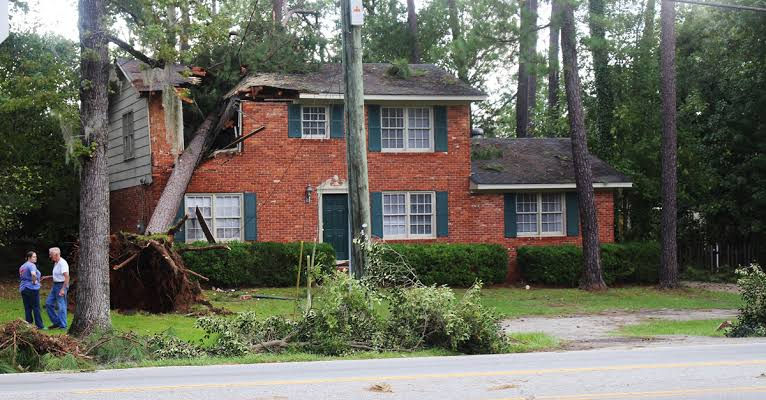
Branches that crack under ice weight often hang loosely and may fall later. These can be extremely dangerous.
Splits in major limbs or trunks
Vertical splits often develop where ice has forced wood fibers apart.
Leaning trees
A tree that leans after an ice storm might have shifted its root plate. Leaning combined with raised soil is a major warning sign.
Twisted or bent branches
Ice combined with wind can twist branches, causing structural failure at weak points.
Bark loss or trunk wounds
When ice pulls or lifts bark, the tree becomes vulnerable to disease and insects.
Crown deformation
Top-heavy species like evergreens may bend or collapse at the crown, resulting in long-term shape distortion.
How Homeowners Can Reduce Ice Damage
Prune trees correctly before winter
Regular tree trimming removes weak branches, reduces canopy density, and helps trees shed ice more effectively. Well-structured trees experience less stress when coated in ice.
Choose species suitable for cold climates
When planting new trees, select species with strong branch unions and flexible wood. Native trees perform best in Western Pennsylvania winter conditions.
Inspect trees for preexisting issues
Look for cracks, dead limbs, weak attachment points, and decay before winter. These weaknesses become serious hazards during ice storms.
Mulch and water before the winter freeze
Healthy trees withstand winter stress better. Mulching helps maintain stable soil temperature and moisture, which improves resilience.
Do not attempt to remove ice manually
Never strike frozen branches or try to shake ice loose. This often causes more damage. Allow ice to melt naturally. If the tree appears unsafe, call a professional for evaluation.
People Also Ask
Why do trees lose limbs during ice storms?
Branches break because ice adds significant weight and reduces branch flexibility. Preexisting weaknesses increase the risk of failure.
Do evergreens suffer more from ice?
Yes. Needles trap ice, adding more weight than bare deciduous branches.
Can a tree recover after major ice damage?
Tree recovery depends on the extent of damage. Minor breakage may heal, but large splits or trunk cracks often require professional assessment.
Should I prune immediately after ice storms?
Only remove clearly dangerous limbs right away. Structural pruning should wait until conditions are safe and ice has melted.
FAQ
Q: Is an ice-damaged tree always a hazard?
A: Not always. Some trees recover naturally, but cracks, leaning, and large broken limbs require prompt evaluation.
Q: How do I know if the tree is unsafe after an ice storm?
A: Look for leaning, broken limbs, trunk splits, or root movement. If unsure, schedule a professional inspection.
Q: How quickly should I call for help?
A: Call as soon as you notice damage. Unstable trees can fail even after the ice has melted.
Q: Can ice cause long-term decline?
A: Yes. Ice injuries allow pests and decay organisms to enter, causing a slow decline over several years if untreated.
Local Considerations for Western Pennsylvania
Western Pennsylvania’s mix of hills, valleys, and varied microclimates creates inconsistent freezing patterns. Trees on slopes freeze differently from trees in sheltered areas. Pittsburgh also experiences freezing rain more frequently than many nearby regions because warm air aloft can cause surface-level icing.
Homeowners in Irwin and surrounding areas should inspect trees after every major ice event and before winter storms fully settle in.
Let Our Team Help Protect Your Trees After Ice Storms
Ice storms can leave trees unstable, weakened, or dangerous. Our team provides safe tree trimming, hazard removal, and professional inspection when winter weather puts your property at risk. If a tree near your home shows cracking, leaning, or breaking after an ice storm, we can help.
Call 412-373-7450 or fill out our online form for a winter tree evaluation. We are here to keep your home and landscape safe through every season.



Comments