Which Trees Require Crane Removal in Pittsburgh?
- Brinko Tree Service

- Jan 26
- 5 min read
AI Summary
Learn which tree situations typically require crane-assisted removal in Pittsburgh
Understand how location, size, damage, and access determine crane use
See why crane removal improves safety and efficiency on complex sites
Know when tree removal, tree trimming, and stump grinding are involved in crane projects

Crane tree removal is not the default option for every job, but in Pittsburgh, it is often the safest and most efficient solution for complex removals. Dense neighborhoods, narrow access points, hillsides, mature trees, and nearby utilities create conditions where traditional removal methods are risky or impractical.
A crane allows sections of a tree to be lifted straight up and away from hazards. This controlled approach reduces the chance of property damage, shortens job timelines, and improves worker safety. Understanding which trees typically require crane removal helps homeowners plan properly and avoid emergency situations.
Trees That Commonly Require Crane Removal
Very large or tall trees
Trees that are extremely tall or have wide canopies often require crane assistance, especially when space is limited.
Common examples include
Mature oak
Large maple
Sycamore
Tulip poplar
Old-growth pine
When a tree’s height or spread exceeds safe rigging limits, a crane provides vertical lift that ground-based methods cannot match.
Trees located close to structures
Trees growing near homes, garages, fences, or additions frequently require crane removal.
Situations that increase risk include
Branches extending over roofs
Trunks within a few feet of walls
Trees between buildings
Limited drop zones
In these cases, crane-assisted tree removal allows sections to be lifted away without swinging or dropping near structures.
Trees near power lines
Trees growing close to overhead power lines often require crane removal for safety reasons.
Crane use helps
Maintain distance from live lines
Prevent uncontrolled limb movement
Reduce outage risk
Allow precise removal
Coordination and careful planning are critical in these situations, making crane use the safest option.
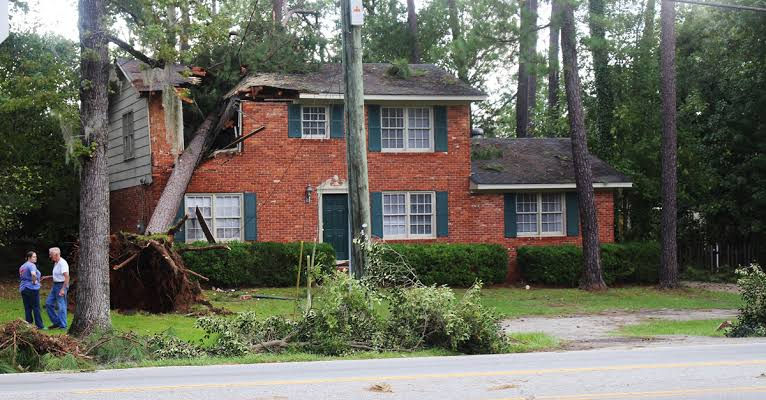
Storm-damaged or unstable trees
Trees damaged by storms often require cranes due to instability.
Common storm damage scenarios include
Split trunks
Trees partially uprooted
Large limbs hanging over structures
Severe lean after heavy wind or rain
Unstable trees can shift unexpectedly during cutting. Crane removal stabilizes the process by supporting the tree while sections are removed.
Dead or decaying trees
Dead trees are often more dangerous to remove than healthy ones. Brittle wood, hollow sections, and internal decay make climbing and rigging unpredictable.
Cranes are commonly used when
The trunk is hollow
Major limbs show decay
The tree cannot safely support climbers
Sections may break unpredictably
Crane assistance reduces reliance on compromised wood.
Trees on slopes or uneven terrain
Pittsburgh properties frequently sit on hillsides. Sloped ground limits equipment placement and increases the risk of uncontrolled movement during removal.
Cranes help by
Lifting sections vertically
Reducing ground disturbance
Minimizing rolling or sliding debris
This is especially important when trees are above homes or retaining walls.
Trees with limited access
Narrow driveways, fenced yards, and tight urban lots restrict equipment access.
When bucket trucks or loaders cannot reach the tree safely, crane removal allows work to proceed from above rather than relying on ground access.
Trees with extensive canopy spread
Trees with wide horizontal limbs pose a unique challenge. Long branches act like levers and can swing dangerously when cut.
Crane removal supports limbs from above, preventing sudden movement and allowing precise sectioning.
Why Crane Removal Is Safer Than Traditional Methods
Crane-assisted removal changes the physics of tree work.
Key safety benefits include
Controlled lifting instead of dropping
Reduced stress on rigging points
Less reliance on tree strength
Smaller safety zones on the ground
Lower risk of collateral damage
In high-risk situations, crane use often prevents accidents that would otherwise be likely.
How the Crane Removal Process Works
Site evaluation and planning
Before crane work begins, professionals evaluate
Tree size and condition
Load weights of sections
Crane placement options
Ground stability
Overhead clearance
Nearby structures and utilities
This planning ensures safe lifts and smooth operation.
Sectional removal
The tree is removed in manageable sections.
Each section is
Secured with rigging
Lifted vertically by the crane
Guided away from hazards
Lowered safely to the ground
This process continues until the trunk is removed.
Coordination with ground crews
Crane operators and ground crews communicate constantly. Precise coordination ensures sections are lifted and placed safely without swinging or contact.
Stump and site completion
Once the tree is removed, stump grinding is often performed to eliminate hazards and prepare the area for landscaping or construction.
When Crane Removal Is Not Necessary
Not every large tree needs a crane.
Crane removal may not be required when
There is open space to fell the tree safely
The tree is small or medium-sized
Access is wide and unobstructed
No structures or utilities are nearby
In these cases, traditional tree trimming or removal methods may be sufficient.
Cost Considerations for Crane Tree Removal
Crane removal typically costs more than standard removal due to
Crane rental
Specialized operators
Additional planning
Larger crews
However, crane removal often saves money by
Preventing property damage
Reducing labor time
Avoiding emergency situations
Completing work faster
In many high-risk scenarios, crane use is the most cost-effective option overall.
Warning Signs a Tree May Require Crane Removal
Homeowners should consider a crane evaluation if they notice
Large branches over roofs or driveways
Severe lean toward structures
Split or hollow trunks
Storm damage near buildings
Trees touching or near power lines
Limited yard access
These conditions often exceed safe limits for ground-based removal.
People Also Ask
Do all large trees require crane removal?
No. Size alone does not determine crane use. Location and condition matter just as much.
Is crane removal safer than climbing?
Yes, especially for unstable or decayed trees.
Does crane removal take longer?
Often no. While setup takes time, overall job duration is usually shorter.
Is crane removal noisy or disruptive?
It can be, but the controlled process often reduces total disruption time.
FAQ
Q Is crane tree removal worth the cost?
When safety risks are high, crane removal often prevents far greater costs from damage or injury.
Q Can crane removal be done in residential neighborhoods?
Yes. Cranes are commonly used in tight urban and suburban settings.
Q Does crane removal damage lawns or driveways?
Professionals plan crane placement to minimize surface impact.
Q Is stump grinding included with crane removal?
Stump grinding is typically a separate service, but is often scheduled immediately after removal.
Local Considerations for Pittsburgh
Pittsburgh’s hills, dense neighborhoods, and mature tree canopy make crane removal more common than in flatter regions. Properties with limited access or trees close to homes benefit the most from crane-assisted solutions. Weather conditions and soil stability also influence crane planning.
Let Our Team Help Determine the Safest Removal Method
If you are unsure whether a tree on your property requires crane removal, a professional evaluation is the best next step. Our team provides expert tree removal, careful tree trimming, and complete stump grinding to address complex tree situations safely and efficiently.
Call 412-373-7450 or fill out our online form to schedule a tree removal assessment. We are here to recommend the safest and most effective solution for your Pittsburgh property.



Comments