Why Bradford Pear Trees Are Being Removed Across PA

Key Takeaway
Bradford pears fail catastrophically because their branches grow from nearly the same point on the trunk, so wind, ice, or age eventually triggers a sudden split that drops massive limbs on fences, roofs, or cars.
They're also invasive, cross-pollinating to spread thorny Callery pear thickets that outcompete native plants, so removal protects both your property and the surrounding ecosystem.
Removal takes skilled rigging since the uneven weight makes the fall direction unpredictable, especially once a tree has already partially split.
Watch for cracks at the crotch, new leaning, or storm-dropped deadwood, and act fast, since a partially failed Bradford pear is often more dangerous than one that hasn't broken yet.

If you have a Bradford pear tree in your yard, you have probably noticed the warning signs already. A branch came down during a summer storm. The canopy split after a windy night. Or maybe a neighbor's tree fell and you started looking at yours differently. Bradford pears are among the most structurally fragile trees planted across Pennsylvania over the past few decades, and homeowners from Greensburg to Pittsburgh are finding out the hard way that their curb appeal comes with serious risks attached.
The problem goes beyond aesthetics. Bradford pears are invasive, weak-wooded, and prone to catastrophic failure at the worst possible moments. If you live in Manor, PA or anywhere across Westmoreland and Allegheny Counties, understanding why these trees are being removed in large numbers can help you make the right decision before one of them makes the decision for you. Professional Tree Removal is the safest and most reliable solution once a Bradford pear becomes a liability.
Why Bradford Pear Trees Are a Problem in Pennsylvania
The push to remove Bradford pear trees across PA has accelerated in recent years, and for good reason. These trees were popular through the 1980s and 1990s for their fast growth, white spring blooms, and tidy shape. But that shape is exactly what makes them dangerous. Bradford pears grow with multiple large branches originating from nearly the same point on the trunk, a structure called a co-dominant stem formation. As the tree matures, those branches push against each other with increasing force until wind, ice, or age triggers a sudden split.
The result is not a small branch on the ground. It is often a massive limb crashing into a fence, a roof, a car, or worse. Pennsylvania homeowners who have watched summer storms sweep through Irwin or Harrison City know how fast conditions can turn. A Bradford pear that looks healthy in May can lose a quarter of its canopy by July.
The Invasive Problem Making Removal an Even Smarter Move
Beyond structural failure, Bradford pears have become a serious ecological concern across the state. The trees cross-pollinate with other pear varieties, producing seeds that spread aggressively into natural areas. Wild offspring, often called Callery pears, grow thorny thickets in fields, along roadsides, and at woodland edges. These thickets outcompete native plants and reduce habitat for local wildlife.
Pennsylvania has joined other states in pushing back against this spread. Removing a Bradford pear from your property does not just protect your home. It eliminates a seed source that is actively contributing to invasive growth in your neighborhood and surrounding natural areas, which makes bradford pear tree removal in PA one of the most ecologically responsible decisions a homeowner can make. Some homeowners in the Murrysville and Export areas have also chosen to replace removed Bradford pears with native alternatives like serviceberry or redbud, which offer seasonal beauty without the structural or invasive risks.
What Bradford Pear Removal Actually Involves
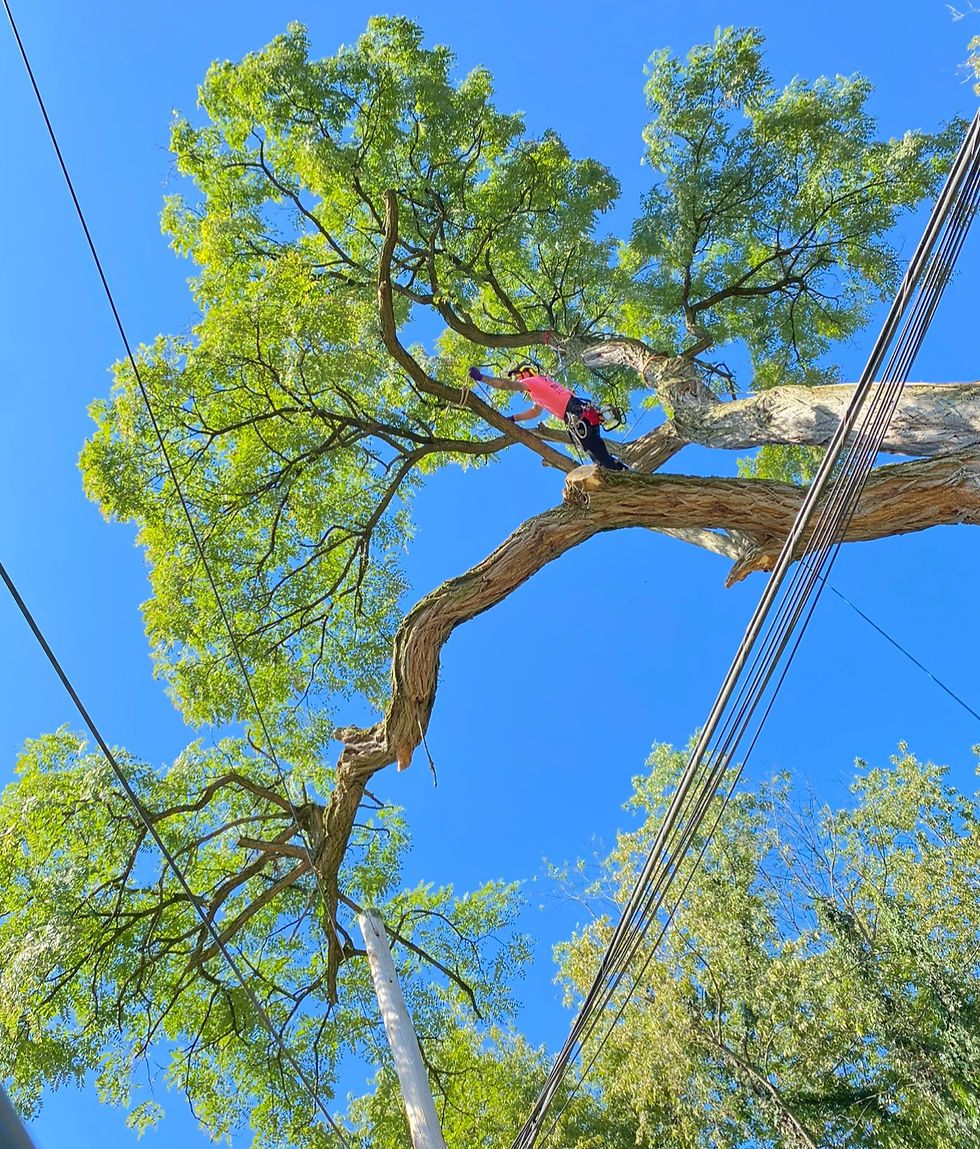
Removing a Bradford pear is not a simple job. These trees can reach 30 to 50 feet tall with wide canopies, and their weight is unevenly distributed because of the branching structure. When one side has already split or is visibly stressed, the removal process requires careful rigging to prevent the tree from falling in the wrong direction.
Here is what that process typically looks like on your property:
A trained arborist assesses which limbs are most at risk before any cuts are made
Directional felling or sectional removal is chosen based on what surrounds the tree
Equipment like bucket trucks or climbing gear may be needed for taller trees
Debris is typically chipped and hauled away to leave the site clean
Stump Grinding is available as a follow-up service to eliminate the remaining base and prepare the area for replanting or landscaping
Costs vary depending on the tree's size, location, and condition. Our post on How Much Does Tree Removal Cost? A Complete Pricing Guide can give you a useful starting point, and contacting Brinko Tree Service directly will get you an accurate quote based on your specific situation.
When to Call a Professional and What to Watch For
Some warning signs demand immediate attention. If your Bradford pear has already begun to split at the crotch where major branches meet the trunk, that tree is a ticking clock. Other signs include large cracks in the bark along the main stem, leaning that has developed or worsened over a season, and dead wood scattered through the canopy after a storm.
Summer storms and high winds are especially hard on Bradford pears. When a limb fails near a structure or power line, you may need Emergency Tree Service rather than a scheduled removal. Do not wait to see if the remaining structure holds. A partially failed Bradford pear is often more dangerous than one that has not yet broken, because the weight distribution becomes unpredictable. Our post on Why Are Dead Trees Riskier to Remove in Summer? covers the seasonal hazards in more detail.
For trees that are not yet in immediate danger but show early stress, Tree Trimming can sometimes reduce risk temporarily by removing heavy co-dominant stems before they fail. A professional assessment will tell you whether trimming buys meaningful time or whether full removal is the safer path. Our post on Tree Removal Service: What to Expect from Professional Companies walks through how that decision gets made in practice.
Why Brinko Tree Service Is the Right Choice in Manor, PA
With nearly 20 years of experience serving homeowners across Westmoreland and Allegheny Counties, Brinko Tree Service has handled Bradford pear removals in all conditions, from tight suburban lots in Irwin to large properties outside Greensburg. The team is fully insured and carries the certifications and equipment required to manage structurally unpredictable trees safely. Every job is assessed by experienced professionals who understand the terrain, the seasonal patterns, and the specific risks that Bradford pears present in western Pennsylvania.
Every job is approached with the same priorities: protect your property, protect the crew, and leave your yard clean and ready for what comes next. Whether you need a single tree removed or want an assessment of several trees on your property, Brinko Tree Service delivers reliable, professional results that Manor, PA homeowners have trusted for decades. You can also read more about selecting the right crew in our post on Tree Removal Companies: How to Choose the Right One.
People Also Ask
Are Bradford pear trees illegal in Pennsylvania?
Pennsylvania has not enacted a full statewide ban on Bradford pear trees, but the state has strongly discouraged planting them due to their invasive spread. Several neighboring states have moved toward bans or restrictions. Checking with your local extension office can clarify any county-level guidance that may apply to your area.
How do I know if my Bradford pear tree is about to split?
The most reliable warning signs are visible cracks or gaps in the crotch where major branches meet, a leaning trunk that has shifted recently, and large sections of dead wood in the upper canopy. Any of these conditions warrants a professional assessment before the next storm season arrives.
What is the best replacement tree for a Bradford pear in Pennsylvania?
Native alternatives like serviceberry, native cherry, dogwood, and redbud offer seasonal bloom, manageable size, and strong branch structure without the invasive risks. A local arborist can recommend species that fit your yard's sun exposure, soil type, and available space.
How long does Bradford pear tree removal take?
Most Bradford pear removals are completed in a single day, though larger trees or those near structures may take longer due to the care needed for sectional removal. Debris chipping and cleanup are typically included in the same visit.
FAQ
Do I need a permit to remove a Bradford pear tree in Pennsylvania?
Permit requirements vary by municipality. Some townships in Westmoreland and Allegheny Counties have ordinances that require approval before removing trees of a certain size. Brinko Tree Service can help you navigate local requirements before work begins.
Will the stump be removed along with the tree?
Stump removal is typically a separate service from tree removal. Brinko Tree Service offers stump grinding to eliminate the remaining base and allow for replanting or landscaping in the cleared area. Confirm what is included when you request your quote.
Can I remove a Bradford pear tree myself?
DIY removal of a large Bradford pear is not recommended. The co-dominant branch structure makes the failure direction unpredictable, and improper cuts can cause sudden uncontrolled drops. Professional crews use rigging, specialized equipment, and established safety protocols that are not replicable with rental equipment. Our post on Safe Tree Removal: Why You Should Hire Professional Arborists explains the risks in detail.
When is the best time of year to remove a Bradford pear?
Bradford pear removal can be done in any season, but late fall through early spring is often preferred because the bare canopy makes it easier to see the branch structure and plan the removal. Trees showing signs of imminent failure should be removed as soon as safely possible, regardless of the season.
Ready to Remove Your Bradford Pear? Brinko Tree Service Can Help
If a Bradford pear on your property is showing warning signs, or if you simply want to get ahead of a problem before it becomes an emergency, now is the right time to act. Brinko Tree Service has spent nearly 20 years helping homeowners across Manor, Irwin, Greensburg, and the broader Westmoreland and Allegheny County region make safe, informed decisions about their trees. The team is fully insured, experienced with bradford pear tree removal in PA, and equipped to handle removals of any size cleanly and professionally.
Do not wait for a storm to make the decision for you. A proactive removal protects your home, your family, and your neighbors, and it eliminates a persistent source of invasive spread in your community. The process is straightforward when you work with a crew that has handled hundreds of these exact situations across western Pennsylvania.
Visit Brinko Tree Service or call 412-373-7450 today. Our team is ready to assess your Bradford pear and provide a reliable, no-guesswork plan for safe removal. Contact us for more information.



Comments