Why Do Trees Lean More After Heavy Pittsburgh Winds?
- Brinko Tree Service

- Dec 7, 2025
- 5 min read
AI Summary
Learn why strong winds cause new or worsening tree leaning across Pittsburgh and Irwin
Understand root plate movement, soil saturation, canopy imbalance, and structural defects
See when leaning is a serious hazard requiring tree removal or tree trimming
Review People Also Ask guidance and detailed FAQs for homeowners

Why Do Trees Lean More After Heavy Pittsburgh Winds?
Pittsburgh and the surrounding Western Pennsylvania region experience frequent wind events throughout the year. From fast-moving storm fronts and river valley gusts to winter squalls and summer thunderstorms, heavy winds place significant stress on local trees. Homeowners often notice that a tree that once stood straight suddenly appears tilted or leaning after a major windstorm. Sometimes the lean develops immediately. Other times, it becomes more noticeable days later as soil settles or root damage worsens.
Leaning trees can pose serious risks. A tree that shifts even a few degrees may be developing root instability or internal cracks that make failure more likely in the next storm. Understanding why trees lean after heavy winds helps homeowners spot danger earlier and take preventive steps to protect their property.
The Main Reasons Trees Lean After Windstorms
Root plate disturbance
The root plate is the broad, shallow base that anchors a tree into the surrounding soil. When strong winds push against the canopy, the entire root plate can shift. If the soil is soft, saturated, or eroded, the roots lose their grip more easily. Pittsburgh’s clay-heavy soil becomes slick and unstable when wet, making root plates more vulnerable to movement.
After a windstorm, look for
Soil lifted on one side of the trunk
A newly exposed root flare
Cracks or gaps in the soil around the base
This type of leaning is often a sign of potentially dangerous instability.
Soil saturation and waterlogged conditions
Many lean issues develop not just from the wind, but from the combination of wind plus saturated soil. Before or after storms, Western Pennsylvania often sees long periods of rain that weaken the ground. When the soil becomes soft, tree roots cannot hold firm. A strong gust can shift the tree, causing it to lean even if the trunk and canopy are intact.
Uneven or top-heavy canopies
Trees with dense canopies catch more wind. When a canopy is lopsided or has heavy growth on one side, wind pressure increases dramatically. This imbalance makes trees twist or bend under stress. Trees that have not been regularly maintained tend to develop heavy limbs and crowded crowns that act like sails during a storm.
Preexisting structural weaknesses
Hidden defects often reveal themselves after heavy winds. Trees that lean overnight may have been previously weakened by factors such as
Internal decay
Hollow sections
Insect infestations
Old storm injuries
Root rot or fungal infections
Once compromised, these weak points fail under the push and pull of strong gusts.
Trees planted too shallow or too deep
Improper planting depth affects root stability. A tree planted too shallowly develops roots that do not anchor deeply into the soil, while a tree buried too deeply suffocates its roots. Both issues create long-term structural instability that becomes noticeable after storms.
Sudden changes in wind direction
Gusts in valleys, hillsides, or open lots can change direction rapidly. When a tree is pushed back and forth repeatedly, its root system loosens. Pittsburgh’s varied landscape, including river valleys and steep neighborhoods, increases the frequency of these shifting gusts.
Trees exposed after nearby removals
When a large nearby tree is removed, surrounding trees suddenly experience stronger winds they were previously protected from. Without shielded airflow, they may lean during the next major storm.
When Is Leaning a Sign of Danger?
Not all leaning trees are unsafe. Some lean naturally as they grow toward sunlight. A gradual lean that has been present for years may be stable. But wind-induced leaning is different and often more serious.
A leaning tree becomes a hazard when
The lean appeared suddenly after a storm
Soil is raised, cracked, or uneven around the base
Roots are visible or lifted
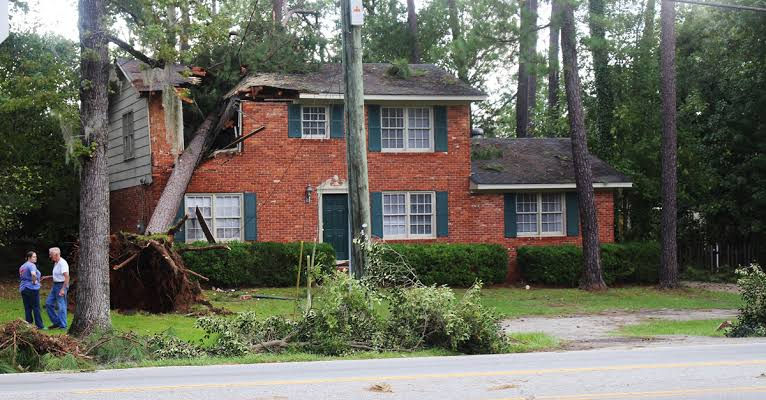
The tree is tilting toward a house, driveway, or power line
The trunk shows cracks on the compression side
The lean increases over days or weeks
These conditions often mean the root system has been compromised. A tree in this condition may fall even without wind.
What Homeowners Should Do After Noticing a Lean
Step 1: Observe from a safe distance
Never walk directly under or near a newly leaning tree. The root system may continue shifting.
Step 2: Look for soil and root changes
Raised soil, exposed roots, or cracking ground indicate recent movement and point to a high risk of failure.
Step 3: Do not attempt to brace or straighten the tree
Home attempts to secure a tree often make the situation worse. Bracing requires professional assessment and proper anchoring.
Step 4: Remove heavy or hanging limbs safely
Do not attempt this yourself. Heavy limbs must be removed through controlled tree trimming to reduce wind load and prevent unpredictable drops.
Step 5: Call a professional for inspection
A trained crew can assess whether the tree is stable enough to keep, whether support systems may help, or whether tree removal is the safest option.
How Professionals Assess Leaning Trees
Professional crews examine
Root plate condition
Soil stability
Trunk cracks or compression marks
Canopy weight distribution
Previous damage
Directional lean in relation to structures
If the lean is dangerous, they use controlled rigging and cutting methods to safely remove the tree. If the tree can be saved, strategic trimming, canopy balancing, or structural supports may be recommended. Stump grinding may follow if full removal is needed.
People Also Ask
Why do trees suddenly lean after storms?
Because the wind shifts the root plate or causes soil to loosen, especially in saturated ground.
Can a leaning tree straighten itself?
Rarely. Once the root plate has moved, trees usually do not return to their original position.
Should I worry about a tree leaning slightly?
A small, long-term lean is often harmless, but a new lean after heavy wind can be dangerous.
Can wind push a healthy tree over?
Yes. Even healthy trees fail when soil is saturated or when gusts exceed structural limits.
FAQ
Q: How fast should I act if a tree starts leaning?
A: Immediately. Leaning can worsen quickly, especially if roots are damaged.
Q: Can I stabilize a leaning tree with stakes?
A: Stakes only work for very young trees. Mature trees require professional evaluation.
Q: Is a leaning evergreen more dangerous than a leaning hardwood?
A: Often yes. Evergreens catch more wind and have shallower root systems.
Q: Will insurance cover damage from a leaning tree?
A: If the tree falls and damages property, many policies provide coverage. Document the hazard and contact your insurer.
Local Considerations for Pittsburgh and Irwin
Western Pennsylvania’s hillside neighborhoods, clay-rich soil, and unpredictable weather create ideal conditions for leaning. Areas near the Monongahela, Allegheny, and Youghiogheny rivers also experience wind tunnels that intensify gusts. Older neighborhoods with mature trees should be inspected frequently during storm seasons.
Let Our Team Help Keep Your Property Safe
A leaning tree can quickly become a serious hazard, and we understand how stressful that can feel. Our team provides safe tree removal, careful tree trimming, and full hazard assessments for storms and wind-related damage. If you notice a new or worsening lean, call 412-373-7450 or fill out our online form. We are here to help protect your home with experienced, reliable care.



Comments