Which Branches Should I Trim Before Spring Storms?
- Brinko Tree Service

- Dec 31, 2025
- 4 min read
AI Summary
Learn which tree branches are most likely to fail during spring storms
Understand how wind, rain, and saturated soil increase branch breakage risks
Identify pruning priorities that improve safety and tree health
Know when professional tree trimming or tree removal is the safest choice

Spring storms in Irwin and the greater Pittsburgh area often bring strong winds, heavy rain, and sudden temperature changes. These conditions place extra stress on trees that may already be weakened from winter. One of the best ways to reduce storm damage is to trim the right branches before storm season begins.
Not all branches need to be removed, and cutting the wrong ones can do more harm than good. Knowing which branches are most likely to fail helps protect your home, improve tree health, and prevent costly emergency situations.
Why Spring Storms Are Hard on Trees
Before looking at specific branches, it helps to understand why spring storms cause so much damage.
Winter weakens wood and branch attachments
Heavy rain saturates the soil, reducing root stability
Strong winds push against dense canopies
New spring growth adds weight to limbs
Branches that are already compromised are far more likely to break under these conditions.
Branches You Should Trim Before Spring Storms
Dead branches
Dead limbs are the highest priority for removal. Because they no longer flex with the wind, they snap easily and often fall without warning.
Signs of dead branches include
No buds or leaves in spring
Brittle wood that breaks easily
Peeling bark
Gray or dry appearance
Removing deadwood reduces immediate safety hazards and prevents damage to nearby healthy branches.
Cracked or split branches
Branches with visible cracks are structurally weak. Even small splits can widen during storms, causing the branch to fail.
Look closely at
Branch bases where they meet the trunk
Areas previously damaged by snow or ice
Limbs that creak or move independently in the wind
These branches should be addressed before storms arrive.
Hanging or partially broken limbs
Storms and winter weather often leave behind branches that are broken but still attached. These hanging limbs are extremely dangerous and unpredictable.
Any branch that is torn, twisted, or resting on another limb should be removed promptly.
Crossing or rubbing branches
When branches rub against each other, they wear away protective bark. This creates weak points and entry paths for decay.
Crossing branches also creates uneven stress points that increase breakage during high winds. Trimming them improves both safety and long-term tree health.
Overextended or heavy limbs
Long horizontal branches act like sails during storms. When combined with spring rain and new growth, their weight increases significantly.
Branches that extend far beyond the main canopy or sag under their own weight are more likely to break and should be reduced or removed.
Weak branch unions
Branches that attach at narrow angles often develop included bark, which prevents a strong wood connection. These unions are common failure points during storms.
If a branch forms a tight V shape where it meets the trunk, it may not be structurally sound.
Branches growing toward structures
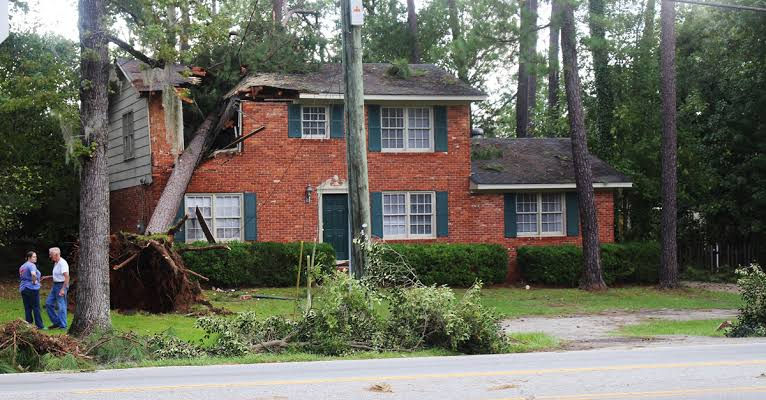
Limbs that extend over roofs, driveways, garages, or power lines pose a higher risk. Even healthy branches can cause damage if they fall.
Reducing these branches lowers the chance of property damage during storms.
Branches You Should Not Remove Without Guidance
Not all pruning improves storm resistance. Removing the wrong branches can weaken the tree.
Avoid
Topping the tree
Removing large central leaders unnecessarily
Cutting too much canopy at once
Making flush cuts against the trunk
These practices create weak regrowth and increase future failure risk. Professional tree trimming ensures cuts are placed correctly and safely.
How Much Pruning Is Safe Before Storm Season?
A general rule is to remove no more than 20 to 25 percent of the canopy in one season. Excessive pruning stresses the tree and can reduce its ability to withstand storms.
The goal is balance, not drastic reduction.
When Branch Trimming Is Not Enough
Some trees show signs of deeper structural problems that pruning alone cannot fix.
Consider a professional evaluation if you notice
Leaning combined with branch failure
Cracks in the trunk
Root movement or exposed roots
Fungal growth at the base
Repeated large limb drop
In these cases, tree removal may be the safest option to prevent severe damage.
How Professionals Prepare Trees for Spring Storms
Tree care professionals assess
Branch structure and attachment points
Canopy balance
Previous storm damage
Tree species and growth habits
Proximity to buildings and utilities
Based on this evaluation, they perform targeted pruning that reduces wind resistance while maintaining tree health. If a tree is beyond recovery, controlled removal followed by stump grinding may be recommended.
People Also Ask
Should I trim trees before or after spring storms?
Before storms is best. Preventive trimming reduces the chance of breakage.
Can trimming really prevent storm damage?
It reduces risk but cannot eliminate it entirely.
Is spring a good time to remove dead branches?
Yes. Deadwood removal is safe and beneficial in early spring.
Do small branches matter?
Small branches can indicate larger structural issues, but large limbs cause the most damage.
FAQ
Q: Can I trim branches myself before storms?
A: Small, reachable branches may be manageable, but larger limbs should be handled by professionals.
Q: Will trimming hurt my tree?
A: Proper pruning improves health. Improper cutting causes long-term damage.
Q: How often should storm prep pruning be done?
A: Most trees benefit from inspection and pruning every 3 to 5 years.
Q: What trees need storm prep the most?
A: Large shade trees and trees near structures need the most attention.
Local Considerations for Irwin and Pittsburgh
Irwin and Pittsburgh experience frequent spring storms with heavy rainfall and gusty winds. Clay soil and hillside properties increase the risk of branch and tree failure. Trees planted decades ago may now be oversized for their space, making seasonal pruning especially important.
Regular storm prep pruning helps trees adapt to these conditions and reduces emergency situations.
Let Our Team Help Prepare Your Trees for Spring Storms
Preventive pruning is one of the most effective ways to protect your home before storm season begins. Our team provides expert tree trimming, honest safety evaluations, and safe tree removal when necessary. We also offer stump grinding to complete the process cleanly and safely.
Call 412-373-7450 or fill out our online form to schedule a spring storm readiness inspection. We are here to help keep your property safe and your trees strong.



Comments